A winterized unit is the right call any time the tank will sit through overnight lows in the 20s or below, which on the Salt Lake valley floor means roughly mid-November into March, and earlier on canyon-adjacent sites…
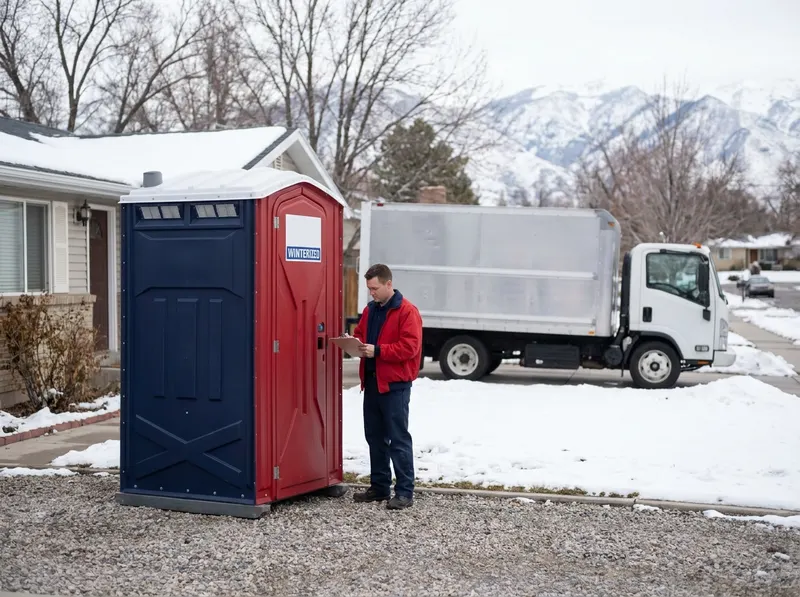
A winterized unit is the right call any time the tank will sit through overnight lows in the 20s or below, which on the Salt Lake valley floor means roughly mid-November into March, and earlier on canyon-adjacent sites above the benches. Untreated tanks slush up, the pump-out truck can't draw them clean, and the deodorizer stops working. Winter-grade tank treatment prevents freezing inside the tank; it does not heat the interior. That distinction decides the rental: for framing crews, remediation work after a burst pipe, snow-season parks maintenance, or a film crew staged on a closed street, a winterized standard unit is the practical, cost-appropriate fit. For a wedding, gala, or ceremony where guests are in formal wear and need a warm, lit, mirrored space, a heated restroom trailer is the correct product — ask about it when you call, or start from our main portable toilet page.
Placement is where Salt Lake City winters actually break rentals, so we ask about it before the truck rolls. On the steep grades of Capitol Hill, the Marmalade District, and the upper Avenues, plows stack snow hard against the curb line, and a unit left in that windrow gets buried, shoved, or clipped. We stage those drops back from the street on a flat, plowed pad or inside a fenced yard, with the door swinging away from the downhill side. In Rose Park, Fairpark, Glendale, Poplar Grove, and Westpointe, the open flats catch valley wind, so units get set against a building face, trailer, or fence and anchored rather than parked in the middle of an exposed lot. On Sugar House, Liberty Wells, and Yalecrest remodels, tight driveways and mature-tree parkstrips mean the placement point gets confirmed on-site so the pump-out truck can still reach it in February with 18 inches of packed snow on the apron. We also keep units out from under eaves and downspouts — Salt Lake City freeze-thaw cycles build ice ridges fast, and an iced-in door is the most common cold-weather complaint we hear.
Service frequency matters more in winter, not less. Cold slows tank activity but heavy insulated-glove use, salt, grit tracked in from sanded roads, and short daylight hours all change how a unit gets used. Weekly service is the baseline for a jobsite crew; twice-weekly is common on sites running 15 or more workers, and additional pump-outs can be added mid-rental on an active account. Every service window is confirmed by dispatch, and every pump-out is logged. For Salt Lake County parks events, winter markets, and Utah State Fairpark or Sugar House Park-area gatherings, we plan the delivery around the venue's plowing and gate schedule so the units aren't sitting in the way of a loader at 6am.
On cost: the figures below are honest market-range ballparks for Salt Lake City, not sight-unseen exact quotes. Access, grade, snow conditions, unit count, rental length, and service frequency all move the number. The exact all-in total — delivery, scheduled service, and pickup in one figure — is confirmed on a free on-site visit or a short call about the site. The $250 minimum charge applies to every order, and we say that up front rather than bolting fees on later. Call (801) 306-0901. Placed on time, serviced on schedule.
Every job gets a firm, written price after a free on-site visit.
Tell us about your winterized portable toilet rental job in Salt Lake City and we'll send a clear, written quote — usually the same day.
 RoyalForge Porta Potty Group