A standard unit is the right call when the users are workers, volunteers, or general public foot traffic and the count matters more than the finish. One stall covers roughly 10 workers on a 40-hour week between…
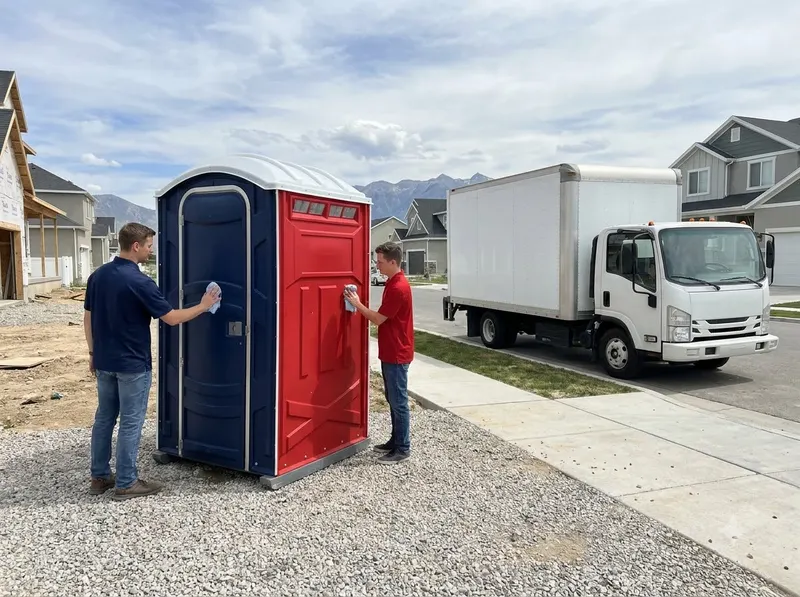
A standard unit is the right call when the users are workers, volunteers, or general public foot traffic and the count matters more than the finish. One stall covers roughly 10 workers on a 40-hour week between pump-outs; add a unit for every additional crew of that size, and add one for each significant increase in hours or headcount. The trade-off against a flushing restroom trailer is straightforward: a standard unit needs no water hookup, no power, no level pad, and costs a fraction per stall — but it has a holding tank and a hand sanitizer dispenser instead of running water, flush, and climate control. Framing crews, roofers, park cleanups, and 5K staging areas are standard-unit work. A reception where guests are in heels and photographers are shooting near the door is trailer work. Many Salt Lake City sites run both: standard stalls for staff and crew, one upgraded unit or a separate ADA-accessible stall where the permit or the guest list requires it.
Placement is where Salt Lake City gets specific, so we ask about it before the truck rolls. The Avenues has narrow one-way lanes, tight parkstrips, and mature trees that limit boom and truck reach, so units usually stage in the driveway apron or behind the garage off the alley. Capitol Hill and the Marmalade District add grade — we set units on the flattest available surface and face doors uphill so they close on their own. Remodels in Liberty Wells, Yalecrest, and Federal Heights typically get a driveway or side-yard placement to keep the unit off the sidewalk and clear of city right-of-way. Larger lots in Rose Park, Glendale, Poplar Grove, and Westpointe give us room to place near the trailer or gate for straight-line service access, and Jordan River Parkway Trail projects generally need a spot a service truck can reach without crossing soft turf. Downtown, Ballpark, and Fairpark jobs near the Utah State Fairpark often mean scheduled early-morning drops before lanes close or events load in. Sugar House and Sugar House Park bookings usually hinge on a coordinator's setup window and where the vendor route runs.
Salt Lake County weather changes the service plan, not the unit. July heat along the Wasatch Front works a tank hard, so we recommend twice-weekly pump-outs on high-traffic summer sites and we will quote the extra visits before you need them rather than after a complaint. Winter means snow storage and plow routes: we keep units off the pile line and out of the way of the blade, and we ask whether your street or lot gets plowed so the pickup does not turn into a shovel job. On long construction runs — the kind that stretch from foundation through finish — the standard fleet flexes with the phase: more stalls during framing and mechanical trades, fewer once you are down to punch list. That is a phone call, not a new contract.
Every quote states the delivery window, the service day, and the total for the full rental term including pickup. If you need extra pump-outs during a heat wave or a big event day, they are priced per visit and added at your direction. Placed on time, serviced on schedule.
Every job gets a firm, written price after a free on-site visit.
Tell us about your standard portable toilet rental job in Salt Lake City and we'll send a clear, written quote — usually the same day.
 RoyalForge Porta Potty Group