Jobsite rental is a different animal from event rental, and the deciding factor is duration and crew count, not headcount alone. If work spans more than about two weeks and the same people are on site daily, a monthly…
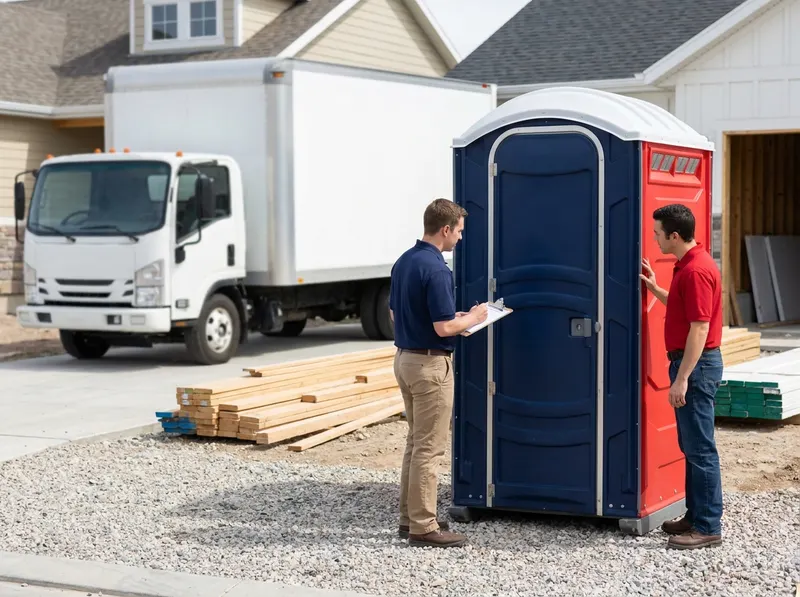
Jobsite rental is a different animal from event rental, and the deciding factor is duration and crew count, not headcount alone. If work spans more than about two weeks and the same people are on site daily, a monthly unit with weekly service is the right call — the tank is sized for repeat use and the route driver becomes a known quantity on your schedule. If you only need coverage for a weekend pour, a single inspection day or a one-off punch-list crew, a short-term or event-style placement makes more sense and costs less overall. The trade-off is real: monthly service locks in a fixed weekly visit and a predictable invoice, while short-term drops save money but leave you re-ordering every time the schedule shifts. OSHA's construction sanitation standard sets unit minimums by crew size, with one facility required for crews of 20 or fewer — so on a site that grows from framing to finishes, the unit count needs to grow with it. Tell us the projected peak crew and we'll stage additional units at the phase where they're actually needed instead of billing for them from day one.
Access is where Salt Lake City jobs get interesting, and we ask about it before the truck rolls. The Avenues and Capitol Hill / Marmalade District mean narrow one-way streets, steep cross-grades and terraced lots where the only viable spot is the apron or a shored corner of the excavation — a placement we'd rather confirm with you than guess at. Sugar House infill along 2100 South and Highland Drive often has zero setback and a shared alley, so units go where the crane and the material laydown aren't. Rose Park, Fairpark, Glendale, Poplar Grove and Westpointe sites near I-215 and the Jordan River Parkway Trail usually have room on the pad, which makes multi-unit banks and a handwash station easy to line up outside the traffic lane. Federal Heights and Yalecrest remodels frequently sit behind gates or HOA rules that dictate where a unit can be visible from the street. On Liberty Wells and Ballpark ADU and townhome builds, we've found the practical answer is often the driveway edge with the door facing away from the neighbors. Give us the gate code, the lockbox, the site super's cell and the earliest hour the street is clear, and that goes on the ticket.
Seasonal service matters more here than in most markets. July and August on an exposed pad in Salt Lake County will make an under-serviced tank obvious to everyone within fifty feet, including an inspector or an owner's rep. Extra pump-outs can be added mid-cycle during heat waves or crew surges without renegotiating the whole rental. In winter, we plan for snow and frost: units need a clear approach for the service truck, and a spot that won't be buried by the plow or the snow pile off the pad. Long-duration work near the University of Utah campus or on multi-phase downtown projects usually settles into a fixed weekly service day, which is what you want — the driver knows the site, the placement doesn't drift, and nobody on your crew has to chase dispatch.
On pricing, we quote plainly. Ballpark figures below reflect typical Salt Lake City jobsite ranges; the exact number is confirmed on a free on-site visit or from your site plan and access notes, and it includes delivery, weekly service and pickup so a three-month rental doesn't grow surprise lines in month two. Call (801) 306-0901 and we'll ask the access questions first. Placed on time, serviced on schedule.
Every job gets a firm, written price after a free on-site visit.
Tell us about your construction site portable toilet rental job in Salt Lake City and we'll send a clear, written quote — usually the same day.
 RoyalForge Porta Potty Group