Monthly rental beats short-term rental the moment your need crosses about two weeks. A two-day event rental prices the truck trip heavily because the truck trip is most of the job. A monthly agreement spreads delivery…
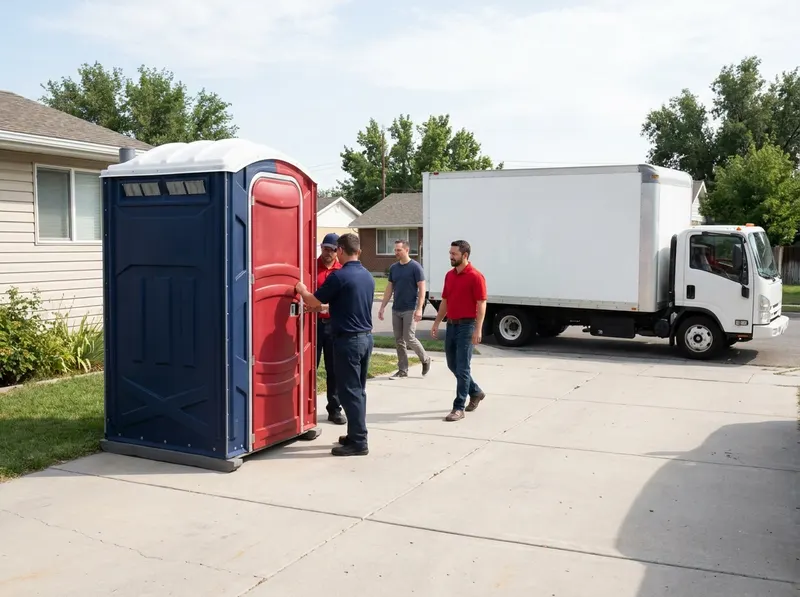
Monthly rental beats short-term rental the moment your need crosses about two weeks. A two-day event rental prices the truck trip heavily because the truck trip is most of the job. A monthly agreement spreads delivery and pickup across the term and locks a repeating service day, so the crew stops thinking about the restroom entirely.
The trade-off is commitment: monthly billing assumes the unit stays put for the full cycle, and a job that wraps early still runs to the end of the billed month. If your timeline is genuinely three to ten days, a short-term or event placement is the honest fit and we will tell you so on the phone.
Service frequency is the variable that actually decides whether a long-term unit works. One standard unit on weekly service comfortably supports about 10 workers on a 40-hour week. Push a framing crew of 20 through the same stall and the tank is the bottleneck by Thursday.
On Salt Lake City sites we scale two ways — add a second unit, or move to twice-weekly service — and July through early September is when that decision matters most. Valley heat drives odor and evaporation hard, and a skipped pump-out on a Rose Park or Westpointe industrial yard becomes obvious to everyone on site before it becomes a complaint. Extra pump-outs can be added mid-month without renegotiating the rental.
Access shapes long-term placements more than square footage does.
Sugar House infill projects and Ballpark-area apartment builds often leave one alley or one gated approach, so we ask about turning radius, overhead lines and lockbox codes before the first drop, then note it on the account so every recurring service visit hits the same spot. Yalecrest and Federal Heights remodels usually need the unit off the park strip and back on the driveway or gravel — quieter for neighbors, and it keeps the door swing away from the sidewalk. In The Avenues and the Capitol Hill / Marmalade District, narrow streets and steep grades mean we place with the door facing downhill-side clear and confirm street-sweeping or permitted-parking days that could block a Tuesday service run.
Liberty Wells, Glendale and Poplar Grove jobs near the Jordan River Parkway Trail get placement notes for public foot traffic and, in winter, for snow stacking — a unit buried behind a plow berm cannot be serviced, so we mark a keep-clear zone at delivery.
Long-term accounts across Salt Lake County also mean winter is part of the plan, not a surprise. Units running through inversion season get freeze-resistant tank charge, and Fairpark or municipal-lot placements get anchored against canyon-wind gusts. Your service day stays the same day each week for the life of the rental unless you ask to change it, which is the entire point of paying monthly.
If your unit count needs to grow as the job moves from excavation into finishes, we adjust the agreement rather than starting a new one. Call (801) 306-0901 with the site address and we will ask the access questions before you have to think of them. Placed on time, serviced on schedule.
Every job gets a firm, written price after a free on-site visit.
Tell us about your long-term monthly portable toilet rental job in Salt Lake City and we'll send a clear, written quote — usually the same day.
 RoyalForge Porta Potty Group